
Mon–Fri: 7 AM–9 PM, Sat–Sun: 6 AM–9 PM(925) 298-0707
Bedrock Lafayette ConcreteBedrock Lafayette Concrete

Concrete sidewalk building in Lafayette CA - a walk built on firm, packed ground

If your front walk is cracked, uneven or lifted by roots, we build a new concrete sidewalk that sits level and sheds water.

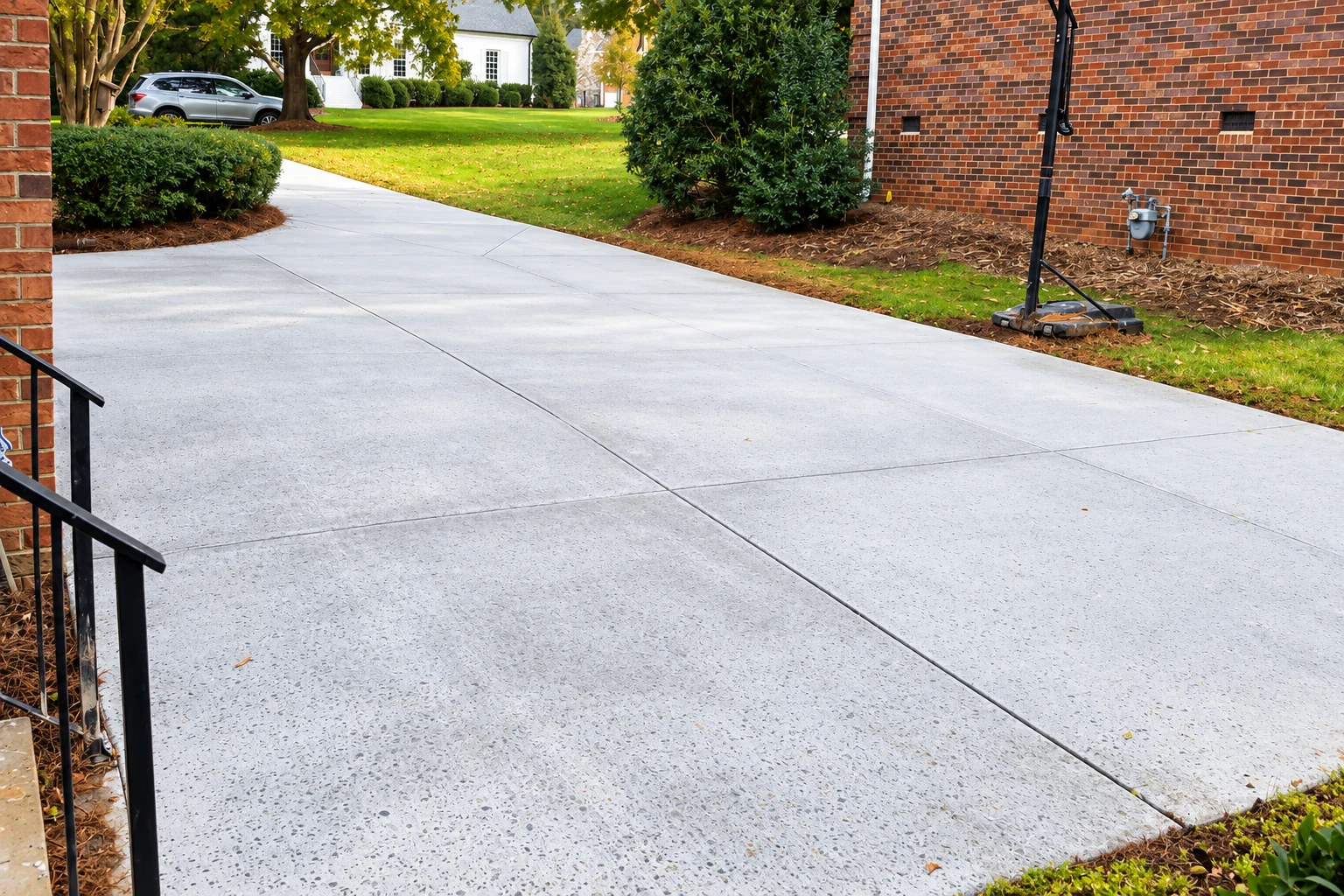
A broad light-gray concrete sidewalk with expansion joints runs beside a brick building, lawn, shrubs and black railings.

What does it take to build a new concrete sidewalk in Lafayette?

Concrete sidewalk building in Lafayette, CA means taking out the old walk if there is one, preparing the ground and pouring a new walk that sits level, drains toward the street and gives you an even surface underfoot. The pour itself is usually the shortest part of the job. Planning, permits and curing take longer.

Most people call us because the old walk has cracked, sunk on one side or been pushed up by a tree root until it catches a toe, or because water pools on it after rain. Usually the cause is underneath. A new walk is only as good as its subgrade, the soil it rests on, so we water and pack that soil firm and wet it again right before the pour, which gives the concrete steady, even ground to sit on.

The price moves with the length and width of the walk, how much old concrete has to come out, the roots and slope we work around, and whether you want a plain finish or something decorative. The schedule turns mostly on the city permit when the walk is near the street, on the weather and on curing time, and you'll see both laid out in the written estimate I prepare after visiting. California's state licensing board requires a licensed contractor when a job needs a building permit, uses hired workers or comes to $1,000 or more in labor and materials, so it's worth asking anyone you're considering to show you their license.

What happens after you call us about a new sidewalk?

Thank you for considering us. I learned this trade on concrete crews through school, started Bedrock Lafayette Concrete in 2023, and still come out to every job myself, so the person who measures your walk is the person you'll see on the day of the pour.

I come out and look at the route myself

I walk the line of the new sidewalk with you, take measurements and listen to what you have in mind before I write anything down. I also look at where rainwater runs now, so the new walk carries it away from your house instead of toward it.

A written estimate with the permit steps spelled out

You get a written estimate, and we go over your choices and the permit steps together so nothing comes as a surprise. When the walk is in the city's right-of-way, the permit holder has to call the city's engineering inspection hotline two business days before work starts and again at the end for a final inspection, so we build both calls into the schedule.

On site with our crew through the final look

During the work I'm on site alongside our crew, and before we call the job done, we look over the finished walk with you. We're fully licensed and insured.

How we handle concrete sidewalk building

Before anyone digs, I look at two things. If a tree stands near the route, we plan around its roots first and suggest bringing in an arborist when roots may need cutting, and I check early how close the walk runs to the street, because that decides which city rules apply. Then we break out the old walk, dig down to firm soil, pack the base, set the forms with a gentle fall toward the street and pour. If the budget has to give somewhere, I'd ask you to let it be the finish and not the ground underneath, because nobody sees the base on the first day, but it's what decides whether the walk still sits level years from now.

A new walk often ties in with other work. If you'd like color, a pattern or a different texture instead of a plain finish, our decorative concrete work can carry that look along the walk. When the sidewalk runs up to the garage, we can also pour new garage floor concrete while the crew is already here, so the two surfaces meet cleanly.

  • Breaking out and hauling away the old walk
  • Digging out soft ground and packing a firm base
  • Forms set so water drains toward the street, not the house
  • Pouring, finishing and cutting control joints
  • Planning around tree roots and the city right-of-way

How the build goes, from first dig to curing

The steps are much the same on most sidewalks, and each one is there for a reason you'll notice years from now, not on the first day.

  1. Dig out to firm ground

    We dig past the loose top soil, and where the ground is soft or spongy, it usually gets dried out or dug out, because a base that's only raked level settles along with the dirt. Then we pack and wet it as I described above, and the old concrete leaves the site with us.

  2. Set and check the forms

    We set the forms, the wooden frames that shape the walk, and check them for size and slope before any concrete arrives, since a form that's slightly off shows in every section after it. Where it helps, we tie in rebar, steel rods that hold the slab together if a crack ever opens.

  3. Pour early and finish

    We schedule the pour for the cooler part of the day, because concrete placed in midday heat dries too fast on top and turns weak and dusty later. We give it a broom finish, fine ridges that keep shoes from slipping when it's wet, and cut control joints, shallow grooves that tell the concrete where to crack, before it hardens too far. Concrete can still crack, and I'd rather say so now, but the joints keep those cracks in lines we chose.

  4. Let it cure before you use it

    Curing is the wait while the concrete gains strength, and walking or rolling anything across it too soon leaves marks and weak spots that stay. We tape off the walk, tell you when it's ready for foot traffic and clean up along the edges before we leave.

Get a written estimate for your new sidewalk

Send us your address, roughly how long the walk is and whether any trees or a creek sit nearby, or call (925) 298-0707. We reply within one business day to set a time, then I come out to measure and listen before writing up a free estimate, with no pressure to book.

(925) 298-0707

Questions about new sidewalks in Lafayette

Do I need a permit for a sidewalk in front of my Lafayette home?

For a walk in the city's right-of-way, yes, because the City of Lafayette requires an Encroachment Permit for any work there. On most residential streets that strip runs about 20 to 25 feet from the center of the road, so a walk near the curb usually falls inside it. We help you work out which offices your project goes through and handle the permit paperwork with you, and for a walk farther back on your lot, I'd ask the city before we start.

Who is responsible for the sidewalk in front of my house in Lafayette?

You are. The city's Public Works department says sidewalk, curb and gutter next to private property are kept up by each property owner, so a new walk stays yours to look after once our crew leaves. That's a big part of why we put so much into the ground underneath, since that's usually where trouble starts.

Can a new sidewalk go in near a tree without harming it?

Usually, yes, as long as the roots are planned for before anyone digs. General tree care guidance says root barriers along the walk, or a base that keeps roots out from under the concrete, help a sidewalk near trees last longer, and you can ask for either in the plan before the pour. Cutting a tree's main support roots can leave it unstable, and one tree care guide says a qualified arborist should be there for any root cutting. If the roots run close to the surface, gravel, crushed granite or brick set in sand generally crack less from roots than concrete does, and I'm glad to talk that choice through with you.

How much does a new concrete sidewalk cost in Lafayette?

A residential sidewalk in the San Francisco area usually costs about $5 to $12 per square foot installed, which is the wider market's range, not our price. The size of the walk and what's in the way of it move the number most. You'll get a Lafayette figure in the written estimate after I've measured your route.

Building a sidewalk along a Lafayette street

Where your walk sits relative to the street shapes the job here more than anything else. When it's in the city's right-of-way, a city inspector reviews the permit application and sets conditions, which come on the issued permit along with typical construction details, and we build to them. Creek-side lots take an extra step, because Lafayette requires a creek setback determination before work and doesn't allow structures in the setback area, so please mention a creek on the first call.

We're based in Lafayette and work throughout the East Bay, in Lafayette and many of the cities around it, including Moraga, Orinda and Walnut Creek. Many of the front walks we're called about sit under mature trees and run close to the curb, so the root and permit planning above comes up often.

Call us about your new front walk

We answer (925) 298-0707 from early morning until 9 PM every day, weekends included, so you can call after work or on a Saturday.

Thank you for reading this far, and if a question about your walk comes up, I'm glad to talk it through with you.

Tell us about your project
(925) 298-0707Get an estimate