
Mon–Fri: 7 AM–9 PM, Sat–Sun: 6 AM–9 PM(925) 298-0707
Bedrock Lafayette ConcreteBedrock Lafayette Concrete

Concrete driveway building in Lafayette CA - a slab that sheds water and holds up

Cracked, sinking or puddled driveway? We dig out, pack the base and pour a new slab that sends water to the street.

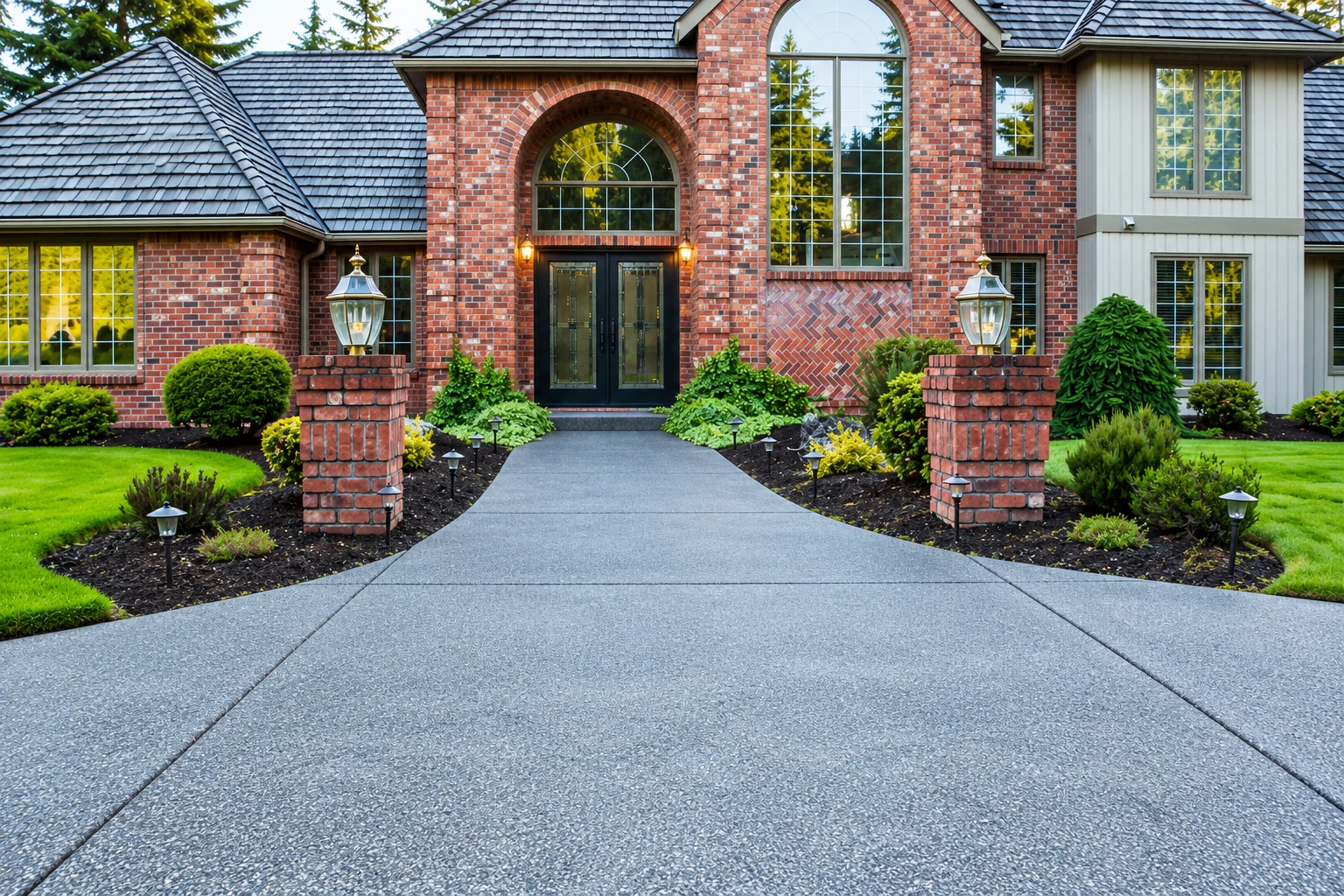
A wide gray concrete driveway leads to the entrance of a brick house, framed by brick pillars and landscaped beds.

What does it take to build a new concrete driveway in Lafayette?

Building a concrete driveway in Lafayette means tearing out the old driveway, packing a firm base and pouring a new slab that slopes toward the street and away from your house and garage, so rain runs off instead of standing.

Most of the driveways I'm asked to look at are cracked across the middle, sunk near the garage, chipping on top or holding a puddle after every rain. Usually the cause is underneath, either a base that was raked level instead of dug out and packed or a slab that tips water back toward the house, so patching the top rarely holds and replacing the slab is the real fix.

The price moves with the size of the driveway, how thick the slab is and how much steel goes in, how much old concrete and soil has to come out, and the finish you choose. The schedule turns on the permits, the weather on pour day and the days your cars have to stay off while the concrete gains strength. We'll work out with you which offices your driveway goes through, whether that's the city, the county or both, and handle the permit paperwork with you. Your own figure comes from the estimate, where we put your choices side by side.

What happens after you call about a new driveway in Lafayette?

Thank you for considering us. I started Bedrock Lafayette Concrete in 2023 after spending my school summers on concrete crews, and I still look at each job myself. We're fully licensed and insured. That matters because the state licensing board requires a license for any job costing $1,000 or more in labor and materials. To set up a visit, call (925) 298-0707 or use the form below.

A visit to measure and listen first

On the visit I measure the driveway, look at where rain runs today and listen to what you park and how you'd like it to look before I write anything down. That way the estimate fits your driveway, not a general one.

A written estimate with your choices laid out

You get the estimate in writing, and we go through the choices that change the price, like thickness and steel, along with the permit steps for your street. Nothing about the job should come as a surprise once we start.

On site with our crew through the final look

I work alongside our crew during the job instead of handing it off, and when the driveway is finished we look it over with you before we call it done. Your satisfaction, guaranteed.

Concrete driveway building, done from the ground up

Before anything is dug, I talk through with you how thick the slab should be and how much rebar it needs for what you'll park on it. Rebar is the steel bar tied into a grid inside the concrete, and a work truck or a camper asks more of it than a small car does. The work then runs in the order laid out below, and two parts of it decide whether the new slab cracks like the old one. Concrete can crack, and I'd rather say so now. Steel won't stop it, but it holds a crack tight so the pieces don't shift. We also cut control joints, shallow grooves that give the slab a planned place to crack, so any cracks follow lines we chose instead of wandering across the middle. If the budget gets tight, I'd keep the money in the base and save on the surface, because the base is buried on day one and it's what keeps the slab from settling.

A new driveway often sits next to other work, and it's easier to plan the pieces together. If you'd like a place to sit off the back or side of the house, our concrete patio construction uses the same crew and the same careful base work. If you want the driveway or its border to look like stone or brick, we can do that with stamped concrete services. Driveways, patios and walks are all flatwork, the ground-level slabs we're best known for.

  • Tearing out and hauling away the old driveway
  • Digging out loose soil and packing a firm base
  • Setting forms and slope so water heads to the street
  • Placing rebar sized for what you'll park
  • Pouring, broom finishing and cutting control joints

From the old driveway to your first drive in

Here's how the work runs once the paperwork is in hand, and why each step matters for how the slab holds up.

  1. Set the layout and the slope

    We stake out the edges and set the forms so the slab falls toward the street and away from your house and garage, because water that runs the wrong way ends up in the garage or along the foundation. We check this step twice, since a slab can't be re-sloped once it's poured.

  2. Dig out and pack the subgrade

    We dig down past the loose dirt and compact the subgrade, the ground the slab rests on, along with a firm base layer, so the slab doesn't settle along with the soil. A base that's only raked level is the most common reason we see driveways sink.

  3. Pour early and finish the surface

    We pour early in the day, because concrete placed in midday heat can dry too fast on top and turn weak and dusty later. Then we give it a broom finish, a light texture dragged across the surface so tires and shoes grip when it's wet.

  4. Let it cure before anyone drives on it

    Curing is the slow hardening that goes on for days after the pour, and the concrete gets stronger the whole time, so we tape the driveway off. Before pour day we'll have worked out with you where your cars park in the meantime.

Get a written estimate for your new concrete driveway

Tell us a little about your driveway, and expect a reply within 1 business day to set a time for me to come out. Quotes are free and done on site, where I'll measure and talk through your choices with you, and there's no pressure to book. You can also call (925) 298-0707.

(925) 298-0707

Questions about new driveways in Lafayette

How much does a concrete driveway cost in Lafayette, CA?

A concrete driveway in San Francisco usually costs about $10 to $21 per square foot, which is the nearest market figure I have and not our own price. Thickness, steel, tear-out and finish move it up or down, as I mentioned above, and your estimate gives you the figure for your own driveway.

Do I need a permit for a new driveway in Lafayette?

Lafayette requires an Encroachment Permit for any work in the city's right-of-way and a Grading Permit if the job moves more than 50 cubic yards of soil. The street end of a driveway often sits in that right-of-way, and we go over which permits apply to yours at the estimate and handle the paperwork with you.

How soon can I drive on a new concrete driveway?

One trade group's guide says to wait at least 7 days before driving on a new driveway. The concrete keeps gaining strength through that first week, and a car's weight on a slab that hasn't cured enough can crack or mark it, which is why we settle where your cars park before the pour.

Is a 5 inch thick concrete driveway worth the extra cost?

It often is if you park heavy vehicles, because one concrete industry group figures that going from 4 to 5 inches adds about 20% to the cost of the concrete but raises the weight the slab can carry by nearly 50%. If you only park everyday cars, the extra may matter less, and I'll lay out both options so you can decide.

Driveway rules at the street and on sloped lots in Lafayette

The city's right-of-way generally runs about 20 to 25 feet from the center of the road on most residential streets and much wider on through-roads, so the end of your driveway nearest the street often sits on city land. Storing materials or equipment there also needs the encroachment permit, so we plan where the forms, steel and supplies will sit before the job starts. For new or reshaped driveways, the city also asks for plans, drawings or a sketch, which we put together with you.

Many lots here sit on a slope, with driveways climbing from the street to the house. If yours is in the Hillside Overlay District, grading or other site work puts the project under a Hillside Development Permit, unless it needs neither a building permit nor a grading permit. The city counts grading as the soil cut out plus the soil filled in, so I'll tell you how much your job will move before anything is filed. We're based in Lafayette and work throughout the East Bay, including Moraga, Orinda, Walnut Creek and many of the cities around them.

Call us about your new driveway

If you have a few photos showing the driveway's rough size, its slope and the edge where it meets the street, have them handy when you call (925) 298-0707 or fill out the form, because they let me picture the job before I come out.

If you're still weighing your options for a new driveway, I'd be glad to talk them through with you.

Tell us about your project
(925) 298-0707Get an estimate